All In Septic Services
Louisa, VA • Serves Louisa County, Lake Anna, Spotsylvania County +3 more
Specialties
Septic Tank Pumping & Cleaning • Real Estate Septic Inspections • Septic System Repairs • Septic Tank & Drainfield Installation
Slow drains, gurgling pipes, and high-water alarms do not automatically mean you need a new septic system. Many issues trace back to a clogged outlet filter, a worn pump or float switch, a damaged baffle, or a tilted distribution box—problems a technician can confirm and repair after inspecting the tank.

Contact local companies directly for septic troubleshooting, component repairs, and inspections:
Louisa, VA • Serves Louisa County, Lake Anna, Spotsylvania County +3 more
Specialties
Septic Tank Pumping & Cleaning • Real Estate Septic Inspections • Septic System Repairs • Septic Tank & Drainfield Installation
Milford, VA • Serves Caroline County, Fredericksburg, Spotsylvania County +4 more
Specialties
Conventional & Alternative Septic Installation • Drainfield Repair & Replacement • AOSS Operation & Maintenance • Routine Septic Tank Pumping
Fredericksburg, VA • Serves Fredericksburg, Spotsylvania County, Stafford County +2 more
Specialties
Residential & Commercial Septic Pumping • Septic Tank Cleaning • Septic System Inspections • Tank & Line Locating
Because your septic tank and piping are buried underground, different problems often look and sound alike from inside the house. A symptom shows where flow is restricted, but only opening the access lid or running a camera inspection can confirm the exact cause:
| What You Notice | Potential Causes a Technician Will Check |
|---|---|
| Slow downstairs drains or gurgling toilets | An overdue tank pump-out, a plugged outlet effluent filter, a partial blockage in the main house-to-tank sewer line, or high liquid levels backing up from the drain field. |
| Sewage backing up into a basement tub or floor drain | A clogged building sewer pipe, a collapsed inlet baffle at the tank entrance, a failed lift pump, or a completely full tank. |
| Red light or buzzer on an outdoor alarm panel | A tripped circuit breaker, a stuck or corroded float switch, a burned-out submersible pump or air blower, or heavy groundwater infiltration into the pump tank after rain. |
| Septic odors or wet spots in the yard | A cracked riser lid, an unlevel or broken distribution box sending all wastewater to a single trench, a crushed pipe, or a saturated drain field. |
Most service calls fall into one of four mechanical or structural repair categories:
Concrete baffles in older tanks can crumble over time. If an inlet baffle breaks, waste can block the incoming house pipe; if an outlet baffle fails, floating grease flows straight out toward the drain field. Technicians replace damaged baffles with PVC tees and replace cracked tank lids or risers.
Systems that pump wastewater uphill or into a pressurized drain field rely on a submersible pump and float switches. Contractors test electrical draw, replace worn pumps or float trees, and repair corroded wiring junction boxes.
The distribution box (D-box) divides liquid evenly among your drain-field trenches. If soil settling, roots, or vehicle weight tilts or cracks the box, one trench gets flooded while the others stay dry. Contractors re-level or replace the D-box and repair crushed or root-invaded pipes.
Engineered alternative systems use air blowers, treatment media, and timed dosing controls. In Virginia, servicing these components requires a licensed onsite sewage system operator.
Requested by home buyers or lenders before closing. Includes locating and opening the tank, pumping it to inspect walls and baffles, testing pumps, and checking the drain field.
Virginia regulations require owners of alternative systems (AOSS) to have a licensed operator inspect the unit at least once a year and file the report with the health department.
Routine sludge-depth checks and written inspection certifications for properties in Chesapeake Bay Preservation Areas.
Press the silence button on the alarm box to stop the buzzer (the warning light will stay on) and cut back on water use right away—hold off on laundry, dishwashers, and long showers. Check your home's main electrical panel to see if the pump breaker tripped during a storm. If the breaker is on and the alarm stays active, call a septic repair contractor. Pump chambers are built with reserve space above the alarm float to give you time to schedule service before sewage backs up indoors.
No. While a saturated or clogged drain field can cause backups, the same indoor symptoms also happen when a tank is simply overdue for pumping, an outlet filter is plugged, an inlet baffle has broken loose, or a tree root has blocked the pipe between the house and the tank. A technician needs to open the tank and inspect the components on site to pinpoint the actual cause.
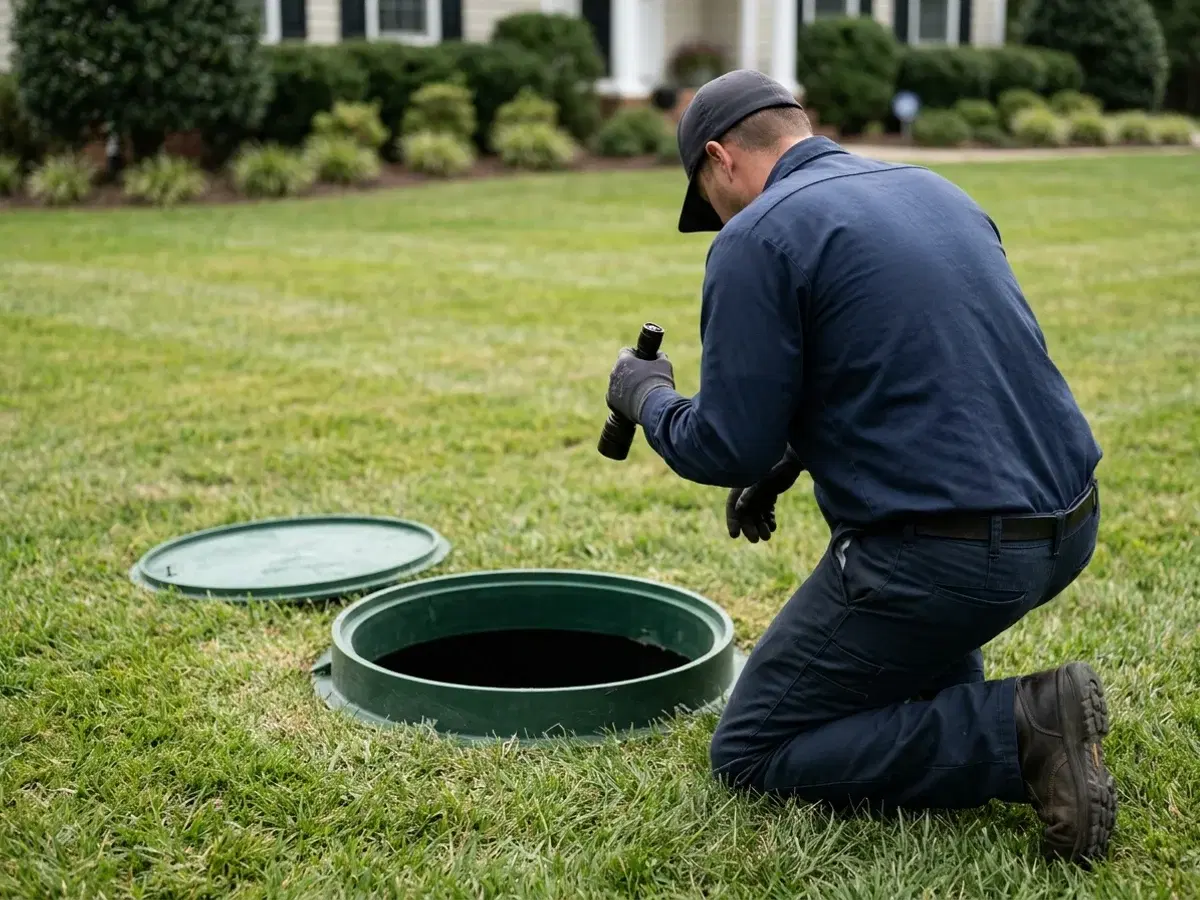
A thorough real estate inspection goes beyond walking across the yard. The inspector typically uncovers the tank access lids, checks liquid and solid levels, pumps the tank to examine the interior walls and baffles, tests any mechanical pumps and float switches, and checks the distribution box and drain field for signs of backup or surface seepage.
Routine maintenance and direct mechanical replacements—such as cleaning an outlet filter, replacing a float switch or effluent pump, or adding a tank riser—generally do not require a new construction permit. Structural tank replacements, distribution box replacements, or alterations to the drain-field trenches require a repair permit from your county Virginia Department of Health (VDH) office.
Find septic contractors serving your area.