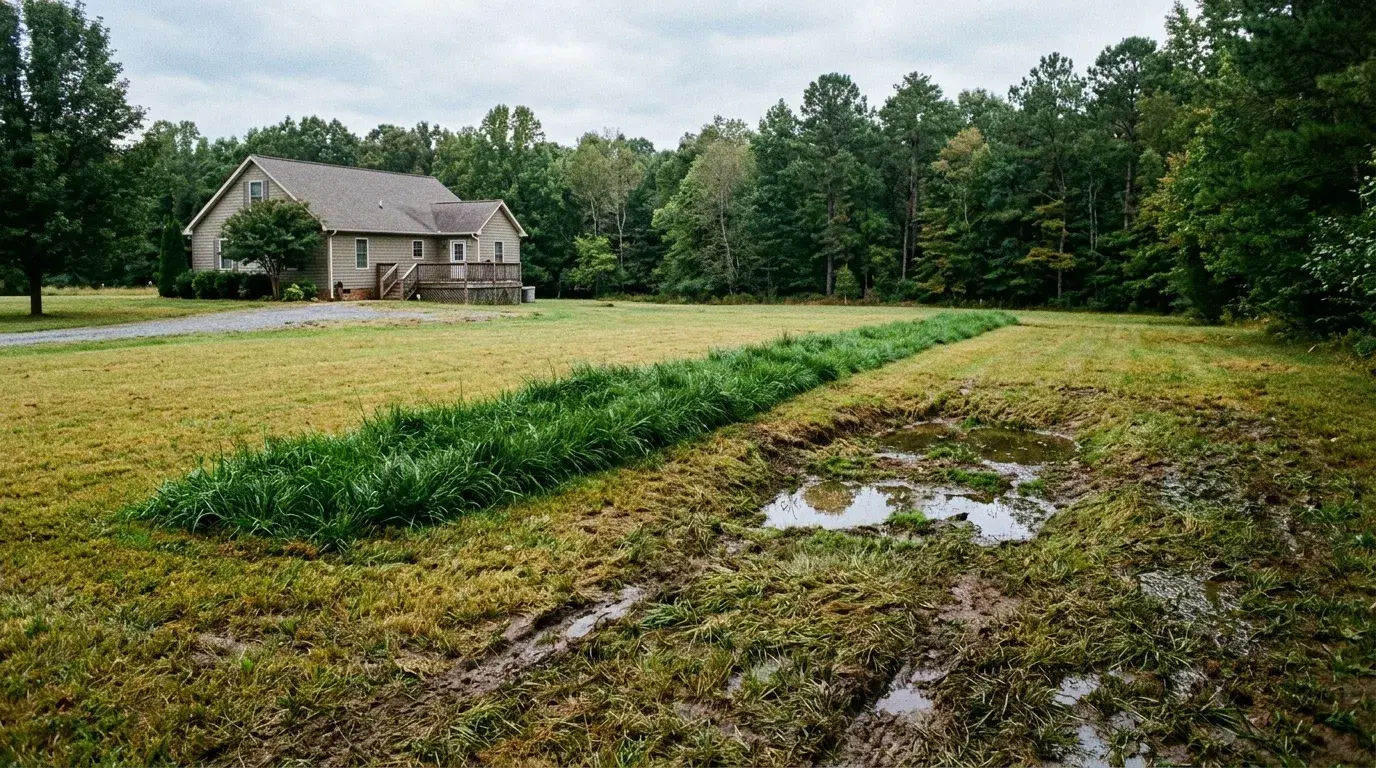
Warning Signs Inside the House and Out in the Yard
Because the tank and drain field are buried underground, trouble usually shows up in one of three places: at your lowest indoor drains, across the lawn above the system, or at an outdoor pump alarm panel. Keep in mind that several different issues can cause the same symptom—a technician must open the tank to confirm the actual cause.
| Warning Sign | Where You Notice It | Possible Causes to Check |
|---|---|---|
| Slow drains & gurgling pipes | Lowest-floor bathrooms, laundry room | Overdue tank pump-out, clogged outlet filter, partial main sewer line clog, or liquid backing up from the drain field. |
| Sewage backing up into a tub or floor drain | Basement or ground-floor fixtures | Blocked pipe between the house and tank, broken inlet baffle, failed pump, or a completely full tank. |
| High-water buzzer or red alarm light | Outdoor pump post or garage control box | Tripped circuit breaker, worn pump or float switch, heavy water use, or rainwater leaking into the pump chamber. |
| Lush, bright-green stripes of grass | Lawn directly over drain-field lines | A tilted distribution box sending extra liquid to one trench, or wastewater rising closer to the surface than normal. |
| Spongy turf, mud, or standing water | Yard over the tank or drain field | Excess household water use, a leaky plumbing fixture, a crushed pipe or distribution box, or soil trenches that can no longer absorb liquid. |
| Coliform bacteria or high nitrates in well water | Private well water test report | Possible groundwater contamination from a leaking tank, saturated drain field, or surface runoff near the wellhead. |
Six Safe Checks to Do Before Calling a Contractor
Before scheduling a service visit, walk through these quick, hands-off checks. Sharing what you find helps the technician bring the right equipment:
- 1. Check whether one drain or every downstairs fixture is slow
If a single upstairs bathroom sink drains slowly while everything else works fine, the clog is almost certainly in that sink's local trap. If the downstairs toilet, shower, and washing machine drain all slow down or bubble together, the restriction is in the main sewer line or septic system.
- 2. Check the date of your last septic pump-out
Look at your last service receipt. If it has been more than 3 to 5 years since the tank was pumped, a full tank or clogged outlet filter is the first thing to rule out.
- 3. Check toilets for silent leaks
A worn toilet flapper that leaks silently can send hundreds of gallons of extra water a day into your septic tank and flood the drain field. Put a few drops of food coloring in the upper toilet tank and wait 15 minutes without flushing—if color shows up in the bowl, replace the flapper.
- 4. Check your breaker panel if you have a pump or alarm
If your system uses a lift pump or an alternative treatment unit, check your main electrical panel to see if the septic circuit breaker tripped during a thunderstorm.
- 5. Look over the yard from a safe distance
Walk near (not through) the drain field to see if a plastic riser lid has been cracked by a lawnmower, if roof downspouts are pouring water onto the trenches, or if there are wet spots on the lawn.
- 6. Pull out your health department permit drawing if you have it
If you have a copy of your property's septic Operation Permit or as-built sketch from the county health department, set it aside for the technician—it shows the tank size and where buried lids and the distribution box are located.
Safety Warnings
What NOT to Do When You Suspect Septic Trouble
- 1. Never open a septic tank lid and lean inside or enter the tank: Septic tanks collect dangerous gases (including hydrogen sulfide and methane) and lack oxygen. Leaning over or entering an open tank can be fatal within seconds. Leave tank opening to trained professionals.
- 2. Do not pour chemical drain openers or septic additives down the sink: Harsh drain cleaners kill the bacteria that digest waste inside your tank and can corrode pipes and concrete baffles.
- 3. Do not keep running water to “flush it through”: When a septic tank or drain field is backed up, extra water has nowhere to go except backward into your downstairs tubs and floor drains.
- 4. Keep vehicles and heavy equipment off a soggy yard: Wet soil softens quickly; driving a truck, tractor, or boat trailer across a damp drain field can crush shallow pipes.
U.S. EPA Video: Protecting Your Septic Drain Field
Public Education Resource • U.S. Environmental Protection Agency (EPA)
Shield Your Field! — U.S. EPA SepticSmart Quick Tip
Demonstrates why parking vehicles, planting trees, or directing roof downspouts over a drain field causes soil compaction and premature absorption failure.
Source: U.S. EPA SepticSmart Education Materials. Embedded via privacy-enhanced mode (`youtube-nocookie.com`). Reference to U.S. EPA educational materials does not imply government endorsement of Septic Service VA or any listed contractor.
Find a Local Septic Contractor
Browse our directory to contact septic pumping and repair contractors serving Fredericksburg and Central Virginia:
Questions & Answers About Septic Warning Signs
What are the earliest warning signs of septic trouble?
Inside the house, the first signs are usually slow-draining sinks, showers, and toilets on the lowest floor, or gurgling sounds in the plumbing after running a washing machine. Outdoors, early signs include septic odors near the tank or roof vent, stripes of unusually bright green grass over the drain field during dry weather, or an audible high-water alarm on a pumped system.
How can I tell if my tank just needs pumping or if the drain field is failing?
You cannot tell for certain from indoor symptoms alone, because a full tank, a plugged outlet filter, and a saturated drain field all restrict flow leaving the house. However, if it has been more than 3 to 5 years since your last pump-out and the yard over the drain field is firm and dry, an overdue tank or clogged filter is a common culprit. If soggy ground, standing water, or strong sewage odors persist over the drain field even after the tank is pumped, a technician will need to inspect the distribution box and trenches.
Can heavy rain cause temporary septic symptoms?
Yes. Several days of heavy rain or snowmelt can saturate the soil and temporarily slow down how fast your drain field absorbs water. During wet weather, cut back on water use (hold off on laundry and long showers) and make sure roof downspouts and sump pumps drain away from the septic area. If slow drains continue after the ground dries out, schedule an inspection.
Can a malfunctioning septic system affect well water?
Yes. According to the U.S. EPA and the Virginia Department of Health, an overflowing tank or failing drain field can release bacteria, viruses, and nitrates into shallow groundwater. If you have a private drinking water well and notice septic trouble in the yard, have your well water tested for coliform bacteria and nitrates.